
Inside the Fight For America’s Paranormal History
As the American Society for Psychical Research walled itself off from the public, one of its most valuable assets — a large library of rare materials — remains mostly unused and unseen.

Editor’s note: This is the second installment in an investigative series probing the long decline of America’s once preeminent paranormal group, the American Society for Psychical Research. Catch up with the first entry here.
Jim Matlock was stunned.
It was 1987 and his first week as the library archivist for the American Society for Psychical Research (ASPR), the foremost paranormal nonprofit in the U.S. He was asked to identify two men featured in oil paintings hanging on the second floor landing in the nonprofit’s swanky, Upper West Side Manhattan townhouse. Matlock wasn’t surprised to be asked a question, since his job was to help people. And he definitely knew who the men were: James Hyslop, one of the ASPR’s founders, and his son George, a former president and board member for the group.
The problem was who was doing the asking: Patrice Keane, the ASPR’s recently-appointed executive director. “She didn’t even know the history of the organization that she is heading,” says Matlock, recalling the conversation. “I could see that she wasn’t really taking it seriously. I could also see that she really wasn’t very knowledgeable.”
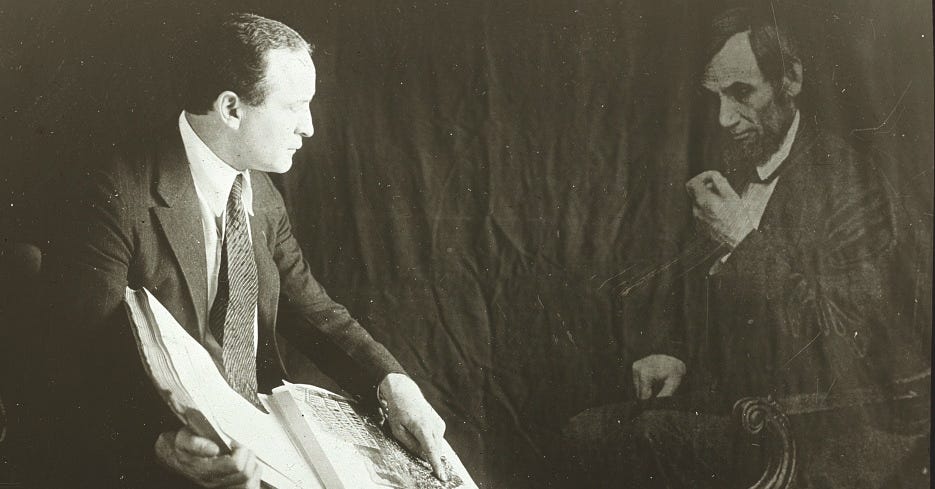
In the 30 years Keane has headed up the ASPR, according to conversations with multiple people who performed work for the storied nonprofit, along with academics and researchers in parapsychology, there are ongoing concerns that its library, with materials dating back to the 18th century, is not being correctly cared for, nor is easily accessible for archival research. Especially in the present day, after the group foreclosed on its Beaux Arts townhouse and was forced to vacate, eventually landing in an upper Manhattan office block. The library contains “over 10,000 volumes and over 300 periodical titles…in over 14 languages,” as well as rare manuscripts and original handwritten correspondence from luminaries including William James, Henry James, W. B. Yeats, Sir Arthur Conan Doyle, Harry Houdini and Upton Sinclair, according to claims on the ASPR website. Whether its contents are adequately maintained is up for debate. And the library’s subject matter does not rely upon researchers or the public to believe in telepathy or survival after death to be considered valuable. It also represents some of the earliest research in American psychiatry and psychology, meaning the collection’s preservation has broader implications for major scientific fields. Representatives for the ASPR and Keane did not respond to requests for comment prior to publication.
In an exclusive interview with Ghost Notes, behavioral scientist Stuart Vyse shared that he was able to meet with Keane and access the ASPR library this past spring at its new home. The Interchurch Center, also known as the “God Box,” provides office space to the ASPR and other spiritually-minded organizations in a 17 story building opposite Columbia University (an institution with deep ties to the ASPR’s origin story.) “I was only admitted to the library, which is a single large room lined with bookcases,” Vyse says, with his visit taking place several months after making his initial request. “There are other rooms in their office suite, but I was not invited to see anything beyond the library.”
Work was slow going during his visit, Vyse says, partly due to the ASPR’s rules about how he could record the information he sought. “I suspect they don’t want images getting out without their permission, and they did not trust me enough to allow photos,” he says. “I was allowed to take notes on my laptop or on paper, but no pictures…I was asked to lock my phone in a drawer while I worked.”
“They have the least transparent archive I have ever worked in.”
The other problem Vyse encountered was in simply finding the materials he needed. “They have the least transparent archive I have ever worked in,” he says. “The archives are poorly organized. There is no digital [database]... The guide to the collection is on paper in a loose-leaf binder. It is very difficult to know where things are and what is in the collection. Without a searchable database of the holdings, it was difficult to get much productive work done.”
Vyse’s experience echoes others who have managed to access the ASPR library over the years. In 2015, Callum Cooper, a psychology professor at the University of Northampton in the U.K., was greatly discouraged following a research trip. He sought materials by the psychic and parapsychologist Alex Tanous, who had worked for the ASPR. “All they gave us was boxes of these heart monitor readouts on the old kind of ink needle,” he says. “Just squiggling lines for pages and pages. And I’m like, what use is that without any notes?” Cooper says Keane was onsite that day and turned down his request to retrieve additional boxes of Tanous’ work from another floor. “Patrice just wouldn’t let us near them. She was coming out with bullshit that a lot of the stuff was still contaminated. That it had got radioactivity on some of the paperwork. I’m like, you’re talking absolute nonsense.” (Loyd Auerbach, a parapsychologist who worked for the ASPR as public relations consultant in the 1980s, said remediation was performed on the townhouse’s street level after a radiologist practice moved out of the building. It remains unclear what year this occurred, whether any of the library was impacted, and, if so, which materials. The ASPR and Keane did not comment.)
Every researcher who spoke to Ghost Notes about the library emphasized the research value of the collection and their hope to see it made more readily available. “All of that material is locked away somewhere,” says Auerbach, after fondly recalling his time spent digging through cabinets of research materials. Cooper added that the British paranormal counterpart, the Society for Psychical Research, is missing half of the correspondence from the famous names in the ASPR archive, such as William James. The British group has its own collection stored at Cambridge University. “If we’ve only got the stuff in the Cambridge archives, we need the other side, which is the letters they received, and they’ve got it…I hope. If not, private collectors will pay hundreds, if not thousands for them.” (Cooper says he acquired volumes in his own collection marked with ASPR bookplates, and it is unclear how they entered public circulation.)
Related reading:
A Tale of Two Paranormal Societies: The Cost of Standing Still

This is the first entry in a series investigating why the most famous American paranormal nonprofit entered a period of prolonged financial and organizational decline – while its British counterpart continued to thrive.
According to Alex Hilton, the financial value of a historic library is wholly separate from its research value. As an independent archivist and consultant who once managed the New York City municipal archive for a decade, Hilton says the point of her work is to make old records searchable and usable. It is unethical, she adds, for an archivist to attempt a financial valuation on a collection. Regardless, she advocates for open access to records, as much as possible, as often as possible. “There’s no point in preserving something for access if it can’t be accessed.”
The current inconsistency of access to the ASPR library is not unheard of, Hilton adds, especially since Keane is the nonprofit’s only paid employee. “An archive that goes untouched or isn’t easy for people to access is often a result of not having a lot of staff. I do have a lot of sympathy for institutions that don’t have the staff to take care of their archives or to service them…it’s probably like five to 10 full time jobs.”
“There’s no point in preserving something for access if it can’t be accessed.”
On the flip side, Hilton also can understand why researchers are distrustful of what happened to the ASPR library. She says the organization can take several steps to earn back trust. “What it could do is first say where the collections are. So this doesn’t even have to be on their website. There’s [online] directories of archives that they could be listed in,” she says. “They can set their own rules about when people can access them. But the important part is just to be transparent because otherwise, suspicion arises.” Other actions the ASPR could take, Hilton says, include seeking out state resources to assess the condition of their collection and receive preservation advice.
In the meantime, the ASPR library remains difficult to access. And it hurts newcomers to the field, says Auerbach, who teaches parapsychology at the Rhine Center in California. He directs students looking for further reading or research to the San Francisco Public Library, as well as a dedicated collection at the University of Maryland. “But otherwise, it’s a loss, you know. An information loss.” Cooper remains flummoxed, as researchers visiting the ASPR to do their work serves as its own kind of marketing. “These are your PhD candidates who are keeping your name going, and bringing in money, and keeping you alive and paying membership… or at least they were, once upon a time.”
Cooper says in some of his most frustrated points, he was tempted to stage an overnight break-in at the ASPR so he could finally know everything they had. “I’d love a whole night in there. I’d have a good root around everything, and just really figure out who’s doing what, and what’s going on, and really find out. What was in there?”

Unanswered door knocks. No one picking up the phone. Millions of dollars unaccounted for. Why did the ASPR pull back from the parapsychology field at large? And what happened to their finances? Stay tuned for the next entry in the ASPR investigative series, part of how Ghost Notes examines who holds power in modern day ghost belief.